

YOUR PERSONAL WILDFIRE ACTION PLAN READY, SET, GO!
The Salt Lake City Fire Department is participating in the “Ready, Set, Go!” campaign to help you prepare for a wildland fire. Our firefighters are also available for free individual home evaluations or group discussions to assist you.
To contact us, call the Salt Lake City Fire Department at (801) 799-3473 or visit www.slc.fire.gov.
READY, SET, GO! Wildfire Action Plan
Saving Lives and Property through Advance Planning
Fire season is now a year-round reality in many areas, requiring firefighters and residents to stay on heightened alert throughout the year.
Each year, wildfires consume hundreds of homes in the Wildland/Urban Interface (WUI). Studies show that as many as 80 percent of the homes lost to wildfires could have been saved if their owners had followed a few simple fire-safe practices. In addition, wildfire-related deaths occur because people wait too long to leave their homes.
Your fire department takes every precaution to help protect you and your property from wildfire. However, in a major wildfire, there will simply not be enough fire engines or firefighters to defend every home.
Successfully preparing for a wildfire requires you to take personal responsibility for protecting yourself, your family, and your property. Use this publication now to get the tips and tools you need to prepare and succeed.
Fire is, and always has been, a natural occurrence in the wildland. Our brush-covered hills, canyons, and forests burned periodically long before we built homes there. Wildfires, fueled by a buildup of dry vegetation and driven by seasonal hot, dry winds, are extremely dangerous and impossible to control. However, many residents have built homes and landscaped without fully understanding the impact a fire could have, and few have adequately prepared their families for a quick evacuation.
It’s not a question of if but when the next major wildfire will occur. That’s why the most important person in protecting your life and property is you, not the firefighter. Plan ahead, prepare now, and use the tips in the next pages to create heightened awareness and a more fire-safe environment for you and your family.
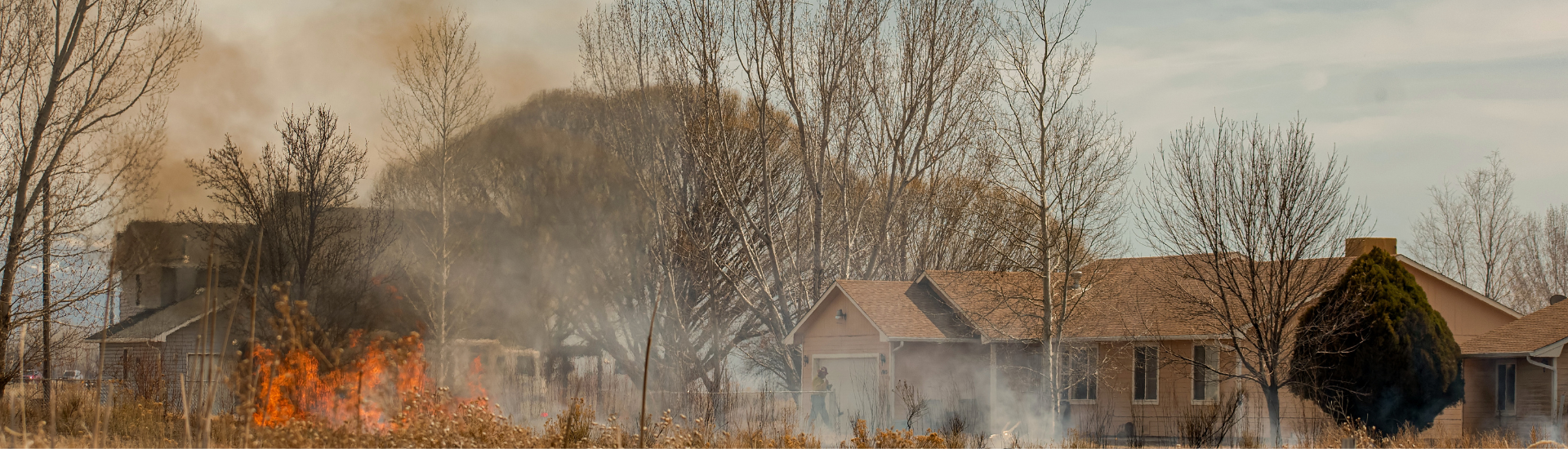
What is Defensible Space?
Defensible space is the required space between a structure and the wildland area that, under normal conditions, creates a sufficient buffer to slow or halt the spread of wildfire to a structure. It protects the home from ignition by direct flame or radiant heat. Defensible space is essential for the survivability of structures during wildfire conditions.
Is your home or business in the Wildland Urban Interface, a space next to the foothills in the north or east side of the city, or a building surrounded by grassland on the west side of the City?
Defensible space works!
If you live in a Wildland Urban Interface, you must provide firefighters with the defensible space they need to protect your home. The buffer zone you create by removing weeds, brush, and other vegetation helps keep fire away from your home and reduces the risk of flying embers.
A home within one mile of a natural area is in the Ember Zone. Wind-driven embers can attack your home, so you and your home must be prepared well before a fire occurs. Ember fires can destroy homes or neighborhoods far from the wildfire’s actual flame front.
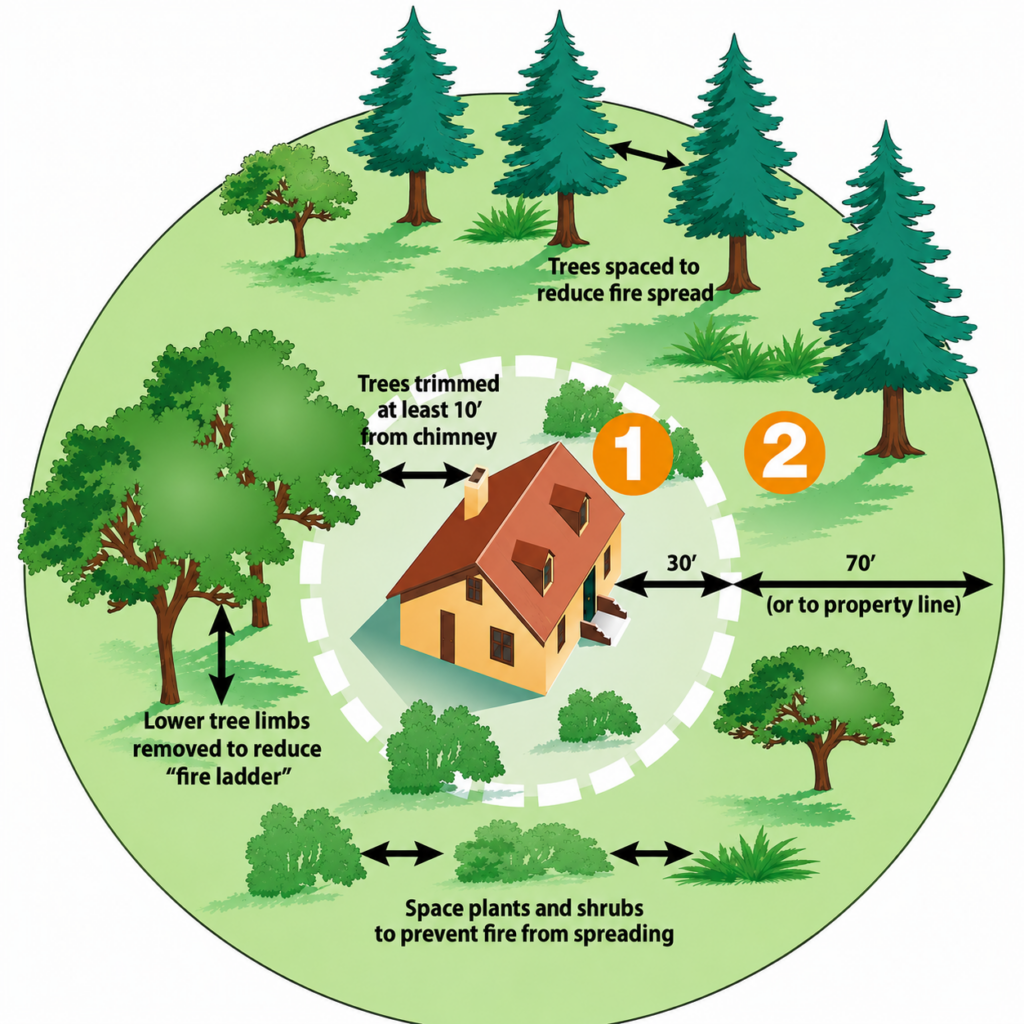
Defensible space is made up of two zone around your home; Zone 1 extends 30 feet from the exterior walls of your home. Zone 2 extends an additional 70 feet beyond Zone 1, or to your property line. Zone 2 extends an additional 70 feet beyond Zone 1, or to your property line.
Follow the advice under each zone to help protect your home.
What is a Hardened Home?
Construction materials and the quality of the defensible space surrounding a home give it the best chance of surviving a wildfire. Embers from a wildfire will find the weak link in your home’s fire protection scheme and gain the upper hand because of a small, overlooked, or seemingly inconsequential factor. However, there are measures you can take to safeguard your home from wildfire. While you may not be able to accomplish all the measures listed below, each will increase your home’s and possibly your family’s safety and survival during a wildfire.
View each tab to see home hardening strategies for your property:
Roofs are the most vulnerable surface because embers can land there, lodge, and start a fire. Roof valleys, open ends of barrel tiles, and rain gutters are all points of entry.
Embers can gather under open eaves and ignite exposed wood or other combustible material.
Embers can enter the attic or other concealed spaces and ignite combustible materials. Vents in eaves and cornices are particularly vulnerable, as are unscreened vents.
Combustible siding or other combustible or overlapping materials provide surfaces or crevices for embers to nestle and ignite.
Embers can enter gaps in doors, including garage doors. Plants or combustible storage near windows can be ignited from embers and generate heat that can break windows and/or melt combustible frames.
Embers can collect on or in combustible surfaces, on the undersides of decks and balconies, and ignite the material, then enter the home through walls or windows.
To further harden your home, consider installing a residential fire sprinkler system. In addition to extinguishing a fire started by an ember that enters your home, it can also help protect you and your family year-round from any fire that may start in your home.
Tour a Wildfire Ready Home
View each tab to see ways you can prepare your home.
- Address
- Inside
- Walls
- Home Site and Yard
- Roof
- Windows
- Vents
- Water Supply
- Garage
- Driveways and Access Roads
- Deck/Patio Cover
- Chimney
- Rain gutters
Make sure your address is clearly visible from the road.
- Keep working fire extinguishers on hand.
- Install smoke alarms on each level of your home and in each bedroom. Test them monthly and change the batteries twice a year.
- Wood products, such as boards, panels, or shingles, are common siding materials. However, they are combustible and not good choices for fire-prone areas.
- Build or remodel with fire-resistant building materials, such as brick, cement, masonry, or stucco.
- Be sure to extend the foundation materials to the roof.
- Ensure you have at least a 100-foot radius of defensible space (cleared vegetation) around your home. Note that additional clearance may be needed for homes in severe-hazard areas. This means looking beyond what you own to determine the impact a common slope or neighbors’ yard will have on your property during a wildfire.
- Cut dry weeds and grass before noon, when temperatures are cooler, to reduce the risk of sparking a fire.
- Landscape with fire-resistant plants that have a high moisture content and are low-growing.
- Keep woodpiles, propane tanks, and combustible materials away from your home and other structures such as garages, barns, and sheds.
- Ensure trees are kept far from power lines.
- Your roof is the most vulnerable part of your home because it can easily catch fire from windblown embers. Homes with wood-shake or shingle roofs are at high risk of being destroyed during a wildfire.
- Build or reroof your roof with fire-resistant materials, such as composition, metal, or tile. Block any gaps between the roof decking and covering to prevent embers from entering.
- Clear pine needles, leaves, and other debris from your roof and gutters.
- Cut any tree branches within 10 feet of your roof.
- Heat from a wildfire can cause windows to break even before the home ignites. This allows burning embers to enter and start internal fires. Single-pane and large windows are particularly vulnerable.
- Install dual-pane windows with the exterior pane of tempered glass to reduce the chance of breakage in a fire.
- Limit the size and number of windows in your home that face large areas of vegetation.
- Vents on homes are particularly vulnerable to flying embers.
- All vent openings should be covered with 1/8-inch or smaller metal mesh. Do not use fiberglass or plastic mesh because they can melt and burn.
- Attic vents in eaves or cornices should be baffled or otherwise protected to prevent embers from entering (mesh alone is not enough).
- Have multiple garden hoses that are long enough to reach any area of your home and other structures on your property.
- If you have a pool or well, consider a pump.
- Have a fire extinguisher and tools such as a shovel, rake, bucket, and hoe available for fire emergencies.
- Install a solid door with self-closing hinges between the living areas and the garage. Install weatherstripping around and under the door to prevent embers from entering.
- Store all combustibles and flammable liquids away from ignition sources.
- Driveways should be designed to allow fire and emergency vehicles and equipment to reach your house.
- Access roads should have a minimum 10-foot clearance on either side of the traveled section of the roadway and should allow for two-way traffic.
- Ensure that all gates open inward and are wide enough to accommodate emergency equipment.
- Trim trees and shrubs overhanging the road to a minimum of 13 1/2 feet to allow emergency vehicles to pass.
- Use heavy timber or nonflammable construction material for decks.
- Enclose the underside of balconies and decks with fire-resistant materials to prevent embers from blowing underneath.
- Keep your deck clear of combustible items, such as baskets, dried flower arrangements, and other debris.
- The decking surface must be ignition-resistant if it’s within 10 feet of the home.
- Cover your chimney and stovepipe outlets with a nonflammable screen of 1/4-inch wire mesh or smaller to prevent embers from escaping and igniting a fire.
- Make sure that your chimney is at least 10 feet away from any tree branches.
- Non-Combustible Boxed-in Eaves
- Box in eaves with noncombustible materials to prevent accumulation of embers.
- Screen or enclose rain gutters to prevent the accumulation of plant debris.
- Non-Combustible Fencing: Make sure to use noncombustible fencing to protect your home during a wildfire.

Your Wildfire Action Plan
Use this worksheet to build your Ready, Set, Go wildfire action plan.